How to create packaging that is attractive and functional
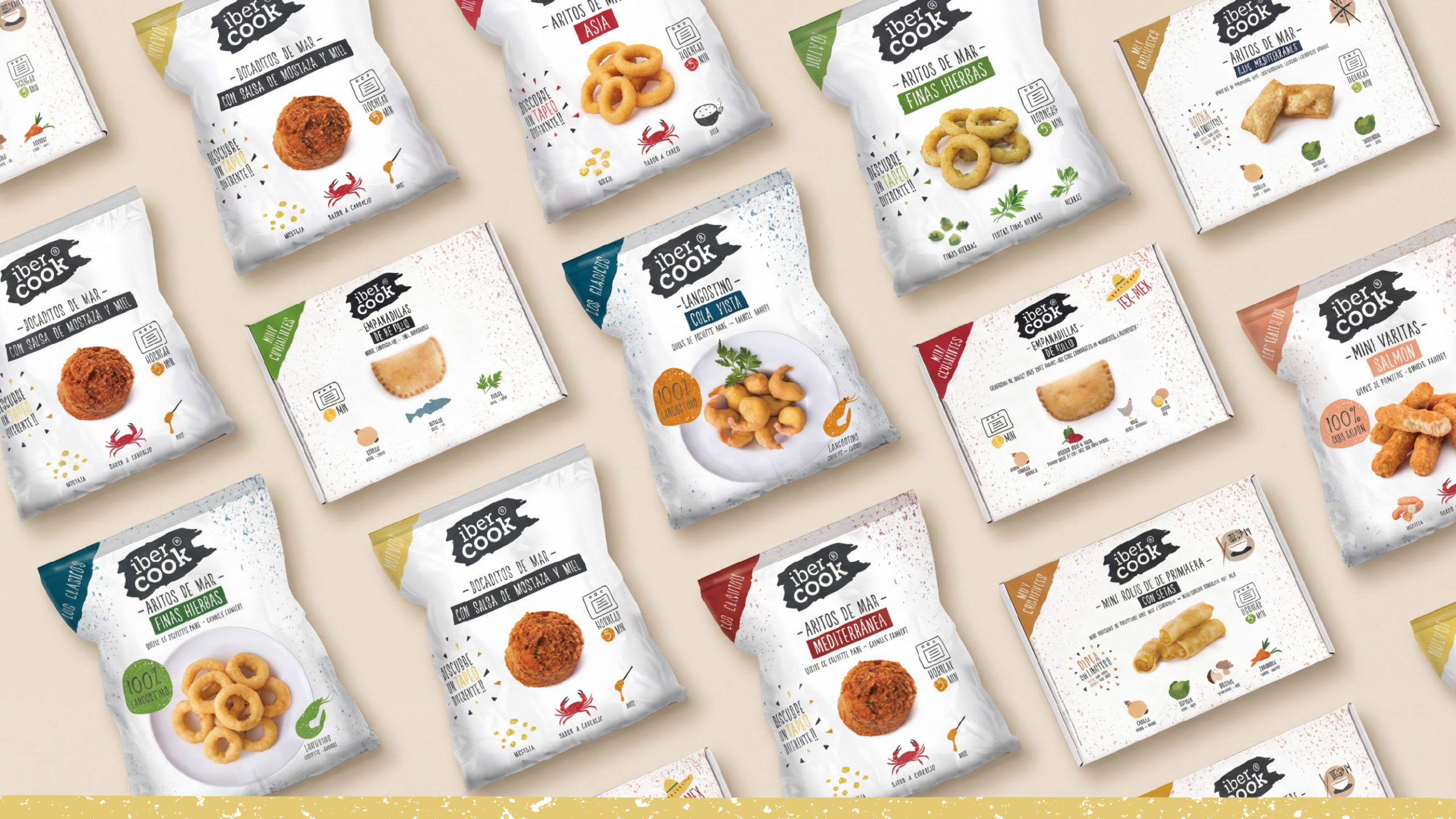
Kool Paper · Packaging
How to create packaging that is attractive and functional
Packaging does not decorate a product: it sells it. Attractive packaging earns attention on the shelf; functional packaging turns that attention into a purchase and keeps it. Doing both is not a matter of taste. It is a matter of method.
The 2.5-second rule
A shopper takes barely 2.5 seconds to choose a product on the shelf. In that time they do not read: they recognize.
If your identity looks generic, the sale is gone before anyone gets the chance to try you. That is why effective packaging works on brand legibility first (who you are) and only then on product information (what you are). Attractive and functional are not opposites: they are two halves of the same job.
Kool Paper · Packaging
The 2.5-second rule
That is how long a shopper takes to choose on the shelf. In that time they do not read: they recognize.
The packaging that wins is the one that communicates value first. Not the prettiest: the one understood soonest.
We do not decorate containers. We build packaging systems you can govern.
Attractive: stop the hand on the shelf
Attractive does not mean pretty. It means differentiation with judgment: standing out by communicating value fast.
- Clear visual hierarchy. Brand first; then category; then what makes it different. Three levels, not ten.
- A color code of your own. A color that identifies you from a distance and orders the range by variety without fragmenting the identity.
- Premium structural design. Shape, material and finish communicate quality before a single word is read, and make the price easier to defend.
- A system, not a piece. Every product reads on its own and reinforces the whole.
Functional: packaging as a business system
Functional packaging does four jobs at once:
- Fast identification — the customer finds what they are looking for without effort.
- Range architecture — the structure scales as you add products, without redoing the brand.
- Regulatory compliance — mandatory information, present and legible (and for the US market, FDA-compliant and bilingual).
- Production viability — designed knowing the materials and the printer.
Packaging, container and label are not the same thing
Kool Paper · Packaging
It is not a label. It is a system.
Each layer contains the one before it. What sells is not the individual piece: it is the whole, governed.
The label informs. The container holds. The system makes the range understood, and chosen.
| Concept | What it is | Scope |
|---|---|---|
| Label | A graphic piece on the product | Tactical |
| Container | The physical container (shape, material) | Structural |
| Packaging | The complete system: structure + range + hierarchy + identity | Strategic |
How to create packaging that sells, step by step
- Discovery. We analyze the category, the codes of the sector and behavior at the point of sale. See the Discovery phase →
- Range strategy. Which products, how they are ranked, what holds them together as a family.
- Concept and structural design. Shape, material and visual code that communicate the positioning.
- Graphic system. Typography, color and iconography as rules, not as decoration.
- Artwork and production. Adapted to formats and materials, print-ready.
- Evolution. The system grows with new products without losing coherence. Explore the Koolbrand Method™ →
How we apply it: real cases
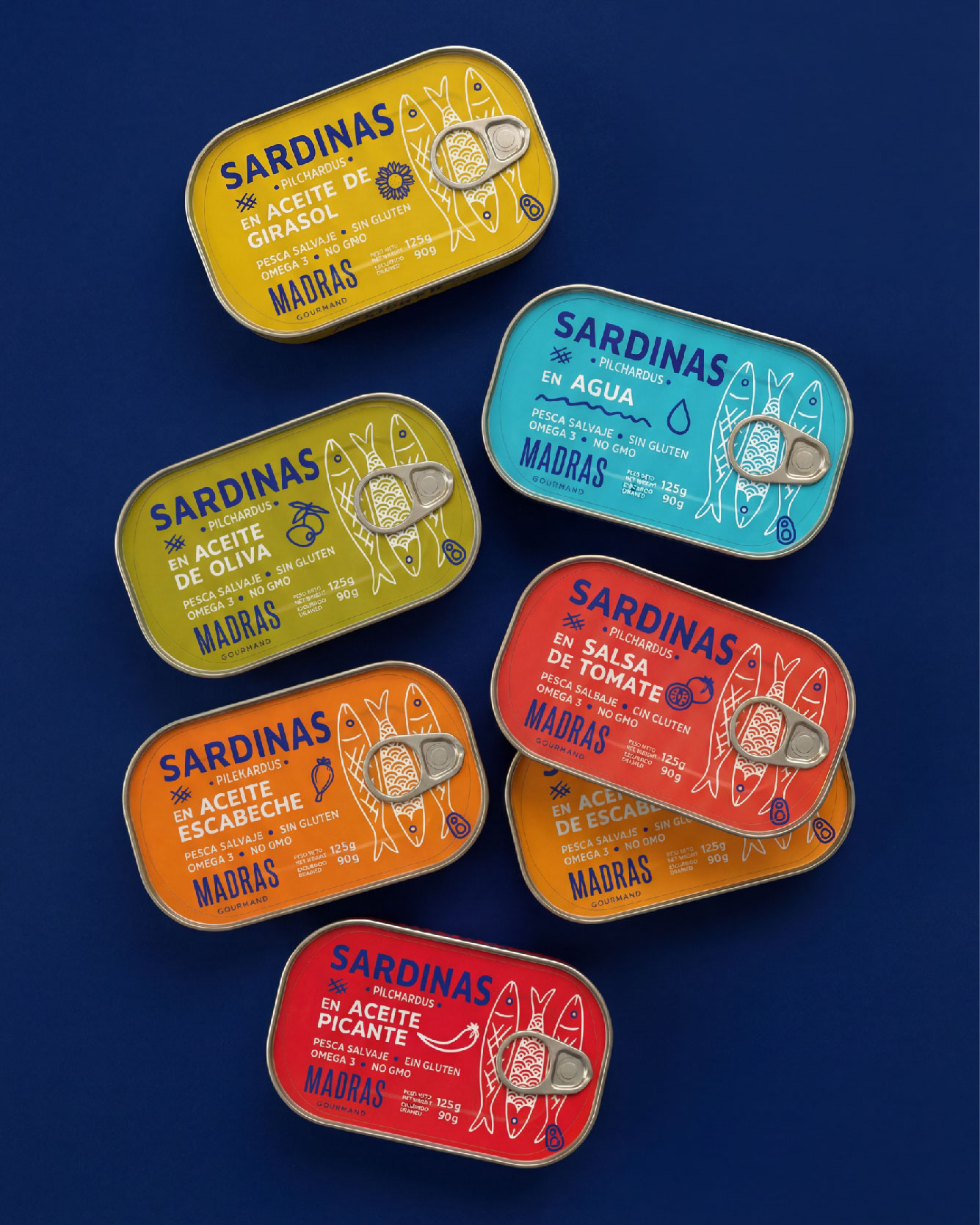
Case · Gourmet tinned food
Madras Gourmand
Rebranding and packaging for a range of tinned seafood: modernise it without losing character, and strengthen premium perception on the shelf.
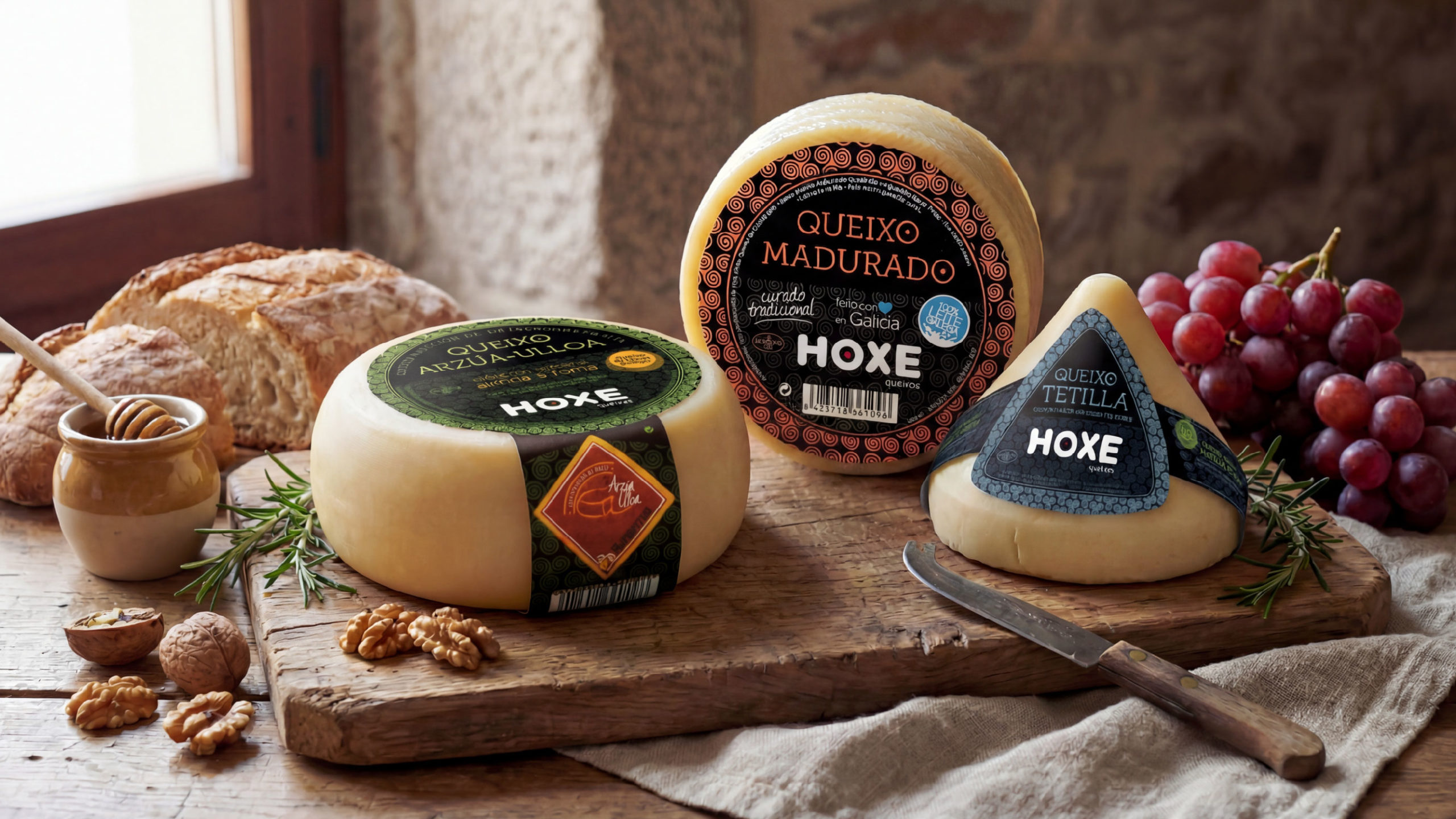
Case · Galician cheese
Hoxe Queixos
A graphic system that communicates Galician origin and craft, and raises the perceived quality of the product at the point of sale.
Mistakes that cost sales
- Decorating instead of ordering. A pretty container with no hierarchy does not sell.
- Designing piece by piece. With no system, every product looks like it belongs to a different brand.
- Forgetting production. Designs the printer cannot execute.
- Competing on price. If the packaging does not convey value, lowering the price is all you have left.
Frequently asked questions
How much does packaging design cost?
How do I make my packaging stand out on the shelf?
What is the difference between packaging and a label?
Does the design include production?
Do you design packaging for export to the United States?
Is your product worth more than your packaging says it is?
Request your packaging assessment →Related papers: Branding with Artificial Intelligence · coming soon — Sustainable packaging · Professional naming.